Discover How to Attract More Customers to Your Restaurant in Minna:
Running a restaurant is about more than preparing delicious food. To build a successful food business, restaurant owners must consistently attract new customers, encourage people to place orders, deliver a satisfying experience and give customers reasons to return.
Whether you operate a small food canteen, a restaurant, a shawarma business, a pastry shop, a takeaway outlet or a cafe in Minna, one question remains important:
How do you get more people to discover your restaurant, buy from you and become regular customers?
Many restaurant owners depend heavily on walk-in customers, personal recommendations and occasional social media posts. While these channels can generate sales, relying on only one or two methods can make revenue unpredictable.
The good news is that attracting more customers does not always require a large advertising budget. With the right combination of visibility, customer experience, digital marketing, restaurant technology and consistent business practices, food businesses can create more opportunities to generate sales.
In this guide, we explore ten practical strategies that restaurants in Minna and other Nigerian cities can use to attract more customers, increase orders and build sustainable businesses.
1. Make Your Restaurant Easy to Find Online
Before someone decides to buy food from your restaurant, they need to know that your business exists.
Today, potential customers may discover restaurants through Google Search, Google Maps, social media, WhatsApp recommendations or food delivery platforms.
If your restaurant is difficult to find online, you could be missing customers who are already looking for the food you sell.
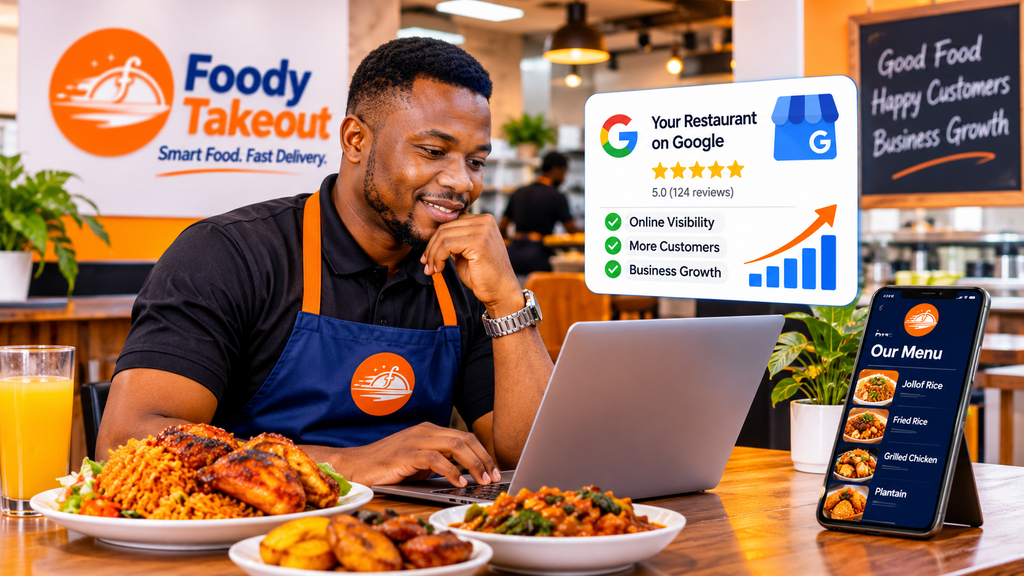
One of the first things every restaurant owner should establish is a complete Google Business Profile.
Your Google Business Profile helps people discover your restaurant when they search for food businesses in their area.
For example, someone in Minna might search for:
- Restaurants in Minna.
- Food vendors near me.
- Shawarma in Minna.
- Restaurants around Gidan Kwano.
- Where to buy food in Bosso.
- Pastry shops in Minna.
A properly maintained profile can help customers discover your business through relevant local searches.
What should your Google Business Profile contain?
- Your correct restaurant name.
- Accurate physical address and location.
- Current opening and closing hours.
- Contact phone number.
- Restaurant category.
- Clear pictures of your food.
- Pictures of your restaurant or food preparation environment.
- A link to your website or menu, where available.
- Customer reviews and responses.
Keep your information accurate and update it whenever something changes.
Google provides official guidance for creating and managing Business Profiles at https://support.google.com/business/.
Practical tip: Search for your restaurant on Google today. If customers cannot easily find your correct location, contact information and food pictures, improving your online profile should be one of your first priorities.
2. Make Your Food Look Appealing Online
People cannot taste your food through a phone screen. They often make their first impression based on what they see.
A customer who discovers your restaurant on Instagram, Facebook, Google or a food delivery platform needs enough visual information to understand what you offer.
This makes food photography an important part of restaurant marketing.
You do not necessarily need an expensive camera or professional photography equipment to start.
A smartphone, good natural lighting and a clean presentation can help you create useful food pictures.
What should you photograph?
- Your best-selling meals.
- Newly introduced dishes.
- Different food combinations.
- Your food packaging.
- Food preparation and plating.
- Your restaurant environment.
- Your team preparing orders.
Avoid uploading blurry pictures, poorly lit images or photographs that do not accurately represent the food customers will receive.
Also, do not rely entirely on graphics and promotional posters. Customers want to see the actual food your restaurant prepares.
Practical tip: Start by taking clear photographs of your five most popular dishes. Use these pictures consistently across your social media pages, Google Business Profile and digital menus.
3. Build a Strong and Consistent Social Media Presence
Social media gives restaurants an opportunity to reach people beyond their immediate physical location.
However, simply creating an Instagram or Facebook account does not automatically bring customers.
You need to give people reasons to follow your restaurant, engage with your content and eventually place orders.
A good restaurant social media strategy should combine educational, entertaining, promotional and product-focused content.
Consider these content ideas:
Food presentation: Show your meals, snacks, pastries and signature dishes.
Behind the scenes: Show how food is prepared, packaged and presented.
Customer experiences: Share genuine customer feedback with permission.
New menu announcements: Introduce new meals and explain what makes them different.
Daily food updates: Let people know what is available and when they can order.
Special offers: Introduce relevant promotions without making your business dependent on discounts.
You do not need to publish ten times every day. Consistency and relevance matter more than posting randomly across multiple platforms.
A restaurant that publishes three useful, well-presented posts every week can build a more recognisable presence than one that publishes many unrelated promotional graphics.
Practical tip: Choose one or two social platforms where your customers are active. Create a simple weekly content schedule and maintain it.
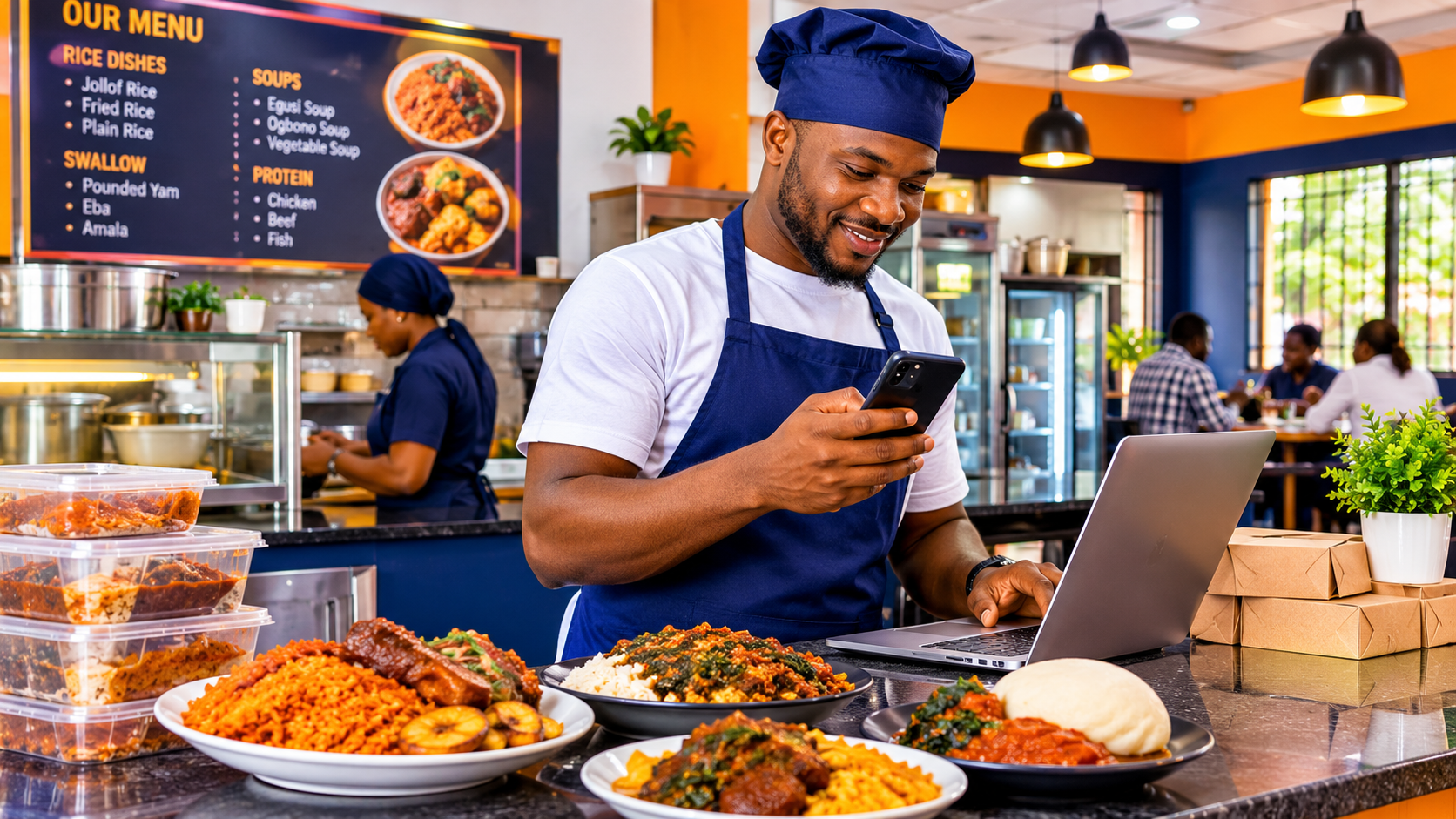
4. Make Your Menu Easy to Understand and Order From
Your menu is not just a list of food items and prices. It is one of your most important sales tools.
A confusing menu can make customers abandon an order, ask unnecessary questions or choose a different restaurant.
Whether customers see your menu physically, on WhatsApp, on Instagram or through a digital ordering platform, it should be easy to understand.
A good menu should include:
- Clear food names.
- Accurate prices.
- Short and useful descriptions.
- Appropriate food categories.
- Pictures of selected dishes.
- Available meal combinations.
- Relevant portion or size information.
For example, instead of listing only:
Jollof Rice – ₦2,500
You could provide a more informative description:
Jollof Rice with Chicken – ₦2,500
A clear description helps customers understand what they are paying for.
Organise your menu strategically
Group similar items together:
- Rice and pasta.
- Swallow and soups.
- Beans and other local meals.
- Shawarma and grills.
- Snacks and pastries.
- Drinks.
Also identify your best-selling and most profitable dishes.
Not every item on your menu contributes equally to your business. Some meals may attract more orders, while others may generate better profit margins.
Understanding the difference can help you decide which items deserve more attention.
Practical tip: Review your menu every month. Identify items that sell well, items that rarely sell and items that are difficult or expensive to prepare consistently.
5. Make Ordering and Customer Communication Easier
Imagine a potential customer sees your food online and decides to place an order.
They send you a message, but nobody responds for thirty minutes.
They ask for your menu, but you send an outdated picture. They ask whether delivery is available, but you are unable to confirm the delivery fee or location.
By the time you respond, the customer may have already ordered elsewhere.
This is why customer communication is an important part of restaurant sales.
Make it easy for customers to:
- Find your menu.
- Ask questions.
- Confirm food availability.
- Understand prices.
- Place orders.
- Know the available payment methods.
- Understand delivery arrangements.
WhatsApp Business can help restaurants organise customer communication through business information, catalogues, quick replies and other useful features.
Digital ordering systems can also reduce the number of manual steps involved in receiving and processing orders.
The objective is not simply to receive more enquiries. It is to make it easier for interested customers to complete purchases.
Practical tip: Set up quick replies for common questions, keep your menu updated and make sure someone is responsible for responding to customer enquiries during business hours.
6. Use Food Delivery Platforms to Reach More Customers
A restaurant does not have to depend entirely on customers physically visiting its location.
Food delivery creates another opportunity to reach customers who prefer ordering meals from their homes, hostels, offices or other supported locations.
This can be particularly useful for restaurants serving student communities and residential areas.
For example, a restaurant around Gidan Kwano may have customers who want its food but do not want to walk to the restaurant every time they need a meal.
A food delivery platform can connect that restaurant with customers through a digital marketplace.
However, joining a platform is only one part of the process. Restaurants must also ensure that their menus, prices, food pictures, preparation processes and order-handling procedures are properly maintained.
Before joining a food delivery service, consider:
- How customers will discover your restaurant.
- How orders will reach your business.
- How quickly you can prepare orders.
- How delivery fees are calculated.
- Who handles delivery coordination.
- Whether the platform’s operating terms make financial sense for your restaurant.
How Foody Takeout supports local restaurants
Foody Takeout Technologies Limited is building a technology-driven food marketplace that connects customers, restaurants and delivery riders.
The platform was created with student communities in mind, starting from Gidan Kwano, Minna.
Through Foody Takeout, participating restaurants can present their businesses and available meals to customers using a digital ordering platform.
An important part of Foody Takeout’s current restaurant model is that participating restaurants pay 0% commission and no restaurant joining fee. The platform currently generates revenue through customer-paid delivery fees.
This means restaurants can participate without a percentage commission being deducted from their food order value under the current model.
Restaurant owners interested in reaching customers through the platform can explore Foody Takeout at: https://foodytakeout.com
Important: Foody Takeout currently operates in Gidan Kwano, Minna. Its wider expansion across Minna is part of its growth ambition, not a claim of existing citywide delivery coverage.
7. Introduce Promotions That Have a Clear Business Purpose
Promotions can attract attention and encourage customers to try your restaurant.
However, offering discounts without understanding their financial impact can reduce your profit instead of improving your business.
Every promotion should have a specific objective.
For example:
To attract first-time customers: Introduce a limited introductory offer on a selected meal.
To increase average order value: Create a meal combination that offers customers a convenient way to purchase multiple items together.
To introduce a new product: Offer a small introductory incentive for customers to try a newly launched dish.
To improve slow business periods: Introduce a targeted offer during hours when your restaurant usually receives fewer orders.
To reward regular customers: Give returning customers an appropriate benefit for their continued patronage.
Before launching a promotion, calculate its cost.
For example, if you sell a meal for ₦3,000 and decide to reduce the price by ₦500, you should understand how that reduction affects your food cost, operating expenses and contribution towards profit.
A promotion that generates many orders but leaves the business losing money is not a successful marketing strategy.
Practical tip: Do not discount everything. Select a specific meal, customer group or business period, define the objective and measure the result.
8. Turn First-Time Customers into Regular Customers
Getting a new customer is important. Getting that customer to return is equally important.
A restaurant that constantly spends time and money searching for new customers without building relationships with existing customers may find it difficult to establish predictable demand.
Think about your own experience.
If you buy food from a restaurant and receive exactly what you expected, the food is good, the staff are respectful and your order arrives as promised, you may decide to buy from that restaurant again.
That is the kind of experience every food business should aim to create.
Here are some ways to encourage repeat purchases:
- Maintain consistent food quality.
- Provide good customer service.
- Prepare orders accurately.
- Keep customers informed about delays.
- Respond professionally to complaints.
- Introduce a simple loyalty programme.
- Communicate relevant new menu updates.
- Appreciate returning customers.
You can also use customer feedback to identify what needs improvement.
Do not assume that customers will return simply because they purchased from you once.
Give them a reason to remember your restaurant.
Practical tip: Start recording customer feedback and identifying repeat customers. Even a simple customer record can help you understand who buys from your business regularly and what they prefer.
9. Use Customer Reviews and Recommendations to Build Trust
People often want to know what other customers think before trying a restaurant for the first time.
Reviews, recommendations and genuine customer experiences can help reduce uncertainty.
A restaurant with clear food pictures, accurate information and genuine positive customer feedback gives potential customers more information when making a decision.
You should make it easy for satisfied customers to share their experiences.
For example:
After a successful order, politely ask the customer whether they would be willing to leave an honest review on Google.
You can also encourage customers to share their experiences on social media.
However, reviews should always be genuine.
Do not purchase fake reviews, create misleading testimonials or pressure customers to leave only positive feedback.
When a customer leaves a negative review, respond professionally.
Acknowledge the concern, investigate what happened and explain how you intend to address the issue where appropriate.
A complaint handled properly can become an opportunity to improve your business.
Practical tip: Make customer feedback part of your daily operations. Review comments regularly and identify recurring problems that need attention.
10. Measure Your Sales and Understand What Is Working
One of the biggest mistakes restaurant owners can make is running a business without understanding its numbers.
You may be posting regularly on social media, introducing promotions and receiving orders, but do you know which activity is actually generating sales?
You need a simple system for measuring business performance.
Start by tracking these important indicators:
Total orders: How many orders does your restaurant receive daily, weekly and monthly?
Total sales: How much money does the business generate from food sales?
Average order value: How much does a customer spend per order on average?
Best-selling meals: Which menu items receive the most orders?
Repeat customers: How many customers purchase from you more than once?
Order cancellations: How many orders are cancelled, and why?
Food costs: How much does it cost to prepare the meals you sell?
Profitability: After accounting for relevant costs and expenses, how much does the business actually retain?
For example, imagine a restaurant receives 150 orders in one month.
If the restaurant generates ₦450,000 in food sales, its average order value is:
₦450,000 ÷ 150 = ₦3,000.
This does not mean the restaurant made ₦450,000 in profit. Ingredients, packaging, labour, rent, utilities and other expenses must still be considered.
The purpose of tracking these numbers is to understand what is happening inside your business.
If orders are increasing but profit is declining, you need to investigate your costs and pricing.
If many customers purchase once but never return, you may need to improve customer experience or retention.
If your best-selling meal is consistently unavailable, you may be losing potential sales.
Practical tip: Review your restaurant’s performance every week. You do not need complicated software to start. A properly maintained spreadsheet or point-of-sale system can help you make better decisions.
A Practical 30-Day Restaurant Growth Plan
Understanding these strategies is useful, but implementing them consistently is what matters.
Here is a simple 30-day plan restaurant owners can start with.
Week 1: Improve Your Online Presence
- Set up or update your Google Business Profile.
- Confirm your restaurant’s location and opening hours.
- Upload clear pictures of your food.
- Organise your menu and prices.
- Update your contact information.
Week 2: Improve Marketing and Visibility
- Choose your main social media platform.
- Photograph your best-selling meals.
- Publish at least three useful posts.
- Introduce your restaurant to relevant local communities.
- Make your ordering instructions clear.
Week 3: Improve Customer Experience
- Review how customer enquiries are handled.
- Introduce quick replies for common questions.
- Review food preparation and packaging.
- Collect genuine customer feedback.
- Identify opportunities to encourage repeat orders.
Week 4: Review Performance and Improve
- Review your total orders and sales.
- Identify your best-selling meals.
- Calculate your average order value.
- Review your marketing activities.
- Identify your biggest operational challenge.
- Set specific goals for the next month.
You do not have to implement everything perfectly within thirty days. The objective is to establish a consistent improvement process.
Common Restaurant Marketing Mistakes to Avoid
While trying to attract more customers, avoid these mistakes:
1. Depending entirely on social media: Social media is useful, but your restaurant should also be discoverable through search engines, maps, recommendations and relevant digital platforms.
2. Posting without a clear objective: Every promotional activity should have a purpose, whether it is increasing awareness, generating orders or encouraging repeat purchases.
3. Using misleading food pictures: Customers should receive food that reasonably matches what your restaurant advertises.
4. Ignoring customer messages: Slow communication can cost you potential orders.
5. Offering discounts without calculating costs: Increased sales do not automatically mean increased profit.
6. Neglecting existing customers: Customer retention deserves attention alongside customer acquisition.
7. Failing to measure performance: Without tracking sales and costs, it becomes difficult to identify what is working.
Frequently Asked Questions About Growing a Restaurant Business in Minna
1. How can I attract more customers to my restaurant in Minna?
Start by improving your online visibility, creating attractive food content, maintaining an accurate Google Business Profile, making your menu easy to access and providing excellent customer service. You can also explore food delivery platforms and local partnerships.
2. How can I increase restaurant sales without spending much on advertising?
Focus on free and low-cost marketing activities such as Google Business Profile optimisation, consistent social media content, WhatsApp Business, customer recommendations, genuine reviews and customer retention.
3. Is Google Business Profile important for restaurants?
Yes. Google Business Profile can help customers discover your restaurant through Google Search and Maps. Accurate business information, food pictures, opening hours and genuine customer reviews can make your business easier to evaluate.
4. How can a small restaurant compete with bigger restaurants?
Small restaurants can compete by focusing on a clear food offering, consistent quality, excellent customer service, strong local relationships, efficient operations and a recognisable online presence.
5. How can restaurants get more online orders?
Restaurants can improve online orders by maintaining an accurate digital menu, using clear food pictures, responding quickly to enquiries, providing reliable ordering instructions and joining relevant food delivery platforms.
6. How can I make customers return to my restaurant?
Maintain food quality, provide consistent service, handle complaints professionally, introduce appropriate loyalty incentives and give customers a reason to choose your restaurant again.
7. Can food delivery platforms help my restaurant grow?
Food delivery platforms can provide another channel through which customers discover and order from restaurants. Results depend on factors such as location coverage, restaurant visibility, food quality, pricing, delivery reliability and customer experience.
8. Can my restaurant join Foody Takeout?
Restaurants interested in participating can explore Foody Takeout at https://foodytakeout.com. The platform currently serves Gidan Kwano, Minna, and restaurant participation is subject to its onboarding and verification process.
Final Thoughts: Restaurant Growth Requires More Than Good Food
Preparing good food is essential, but building a successful restaurant requires more than that.
Customers must be able to discover your business, understand what you offer, place orders conveniently and receive an experience worth returning for.
That is why restaurant growth should combine marketing, technology, customer experience, operational efficiency and business performance measurement.
For restaurants in Minna, there is an opportunity to use digital tools and better business practices to reach more customers and build stronger relationships within their communities.
At Foody Takeout, we believe technology can play an important role in improving how restaurants connect with customers.
We are building a food marketplace that connects customers, restaurants and delivery riders, starting from Gidan Kwano, Minna.
Our goal is to make food commerce more convenient, efficient and accessible while helping local food businesses participate in a growing digital food ecosystem.
Are you a restaurant owner looking to reach more customers through technology?
Explore Foody Takeout:
Foody Takeout Technologies Limited
Technology connecting customers, restaurants and riders.